Social Media in Our Lives: the 2026 Honors Chemistry Debate
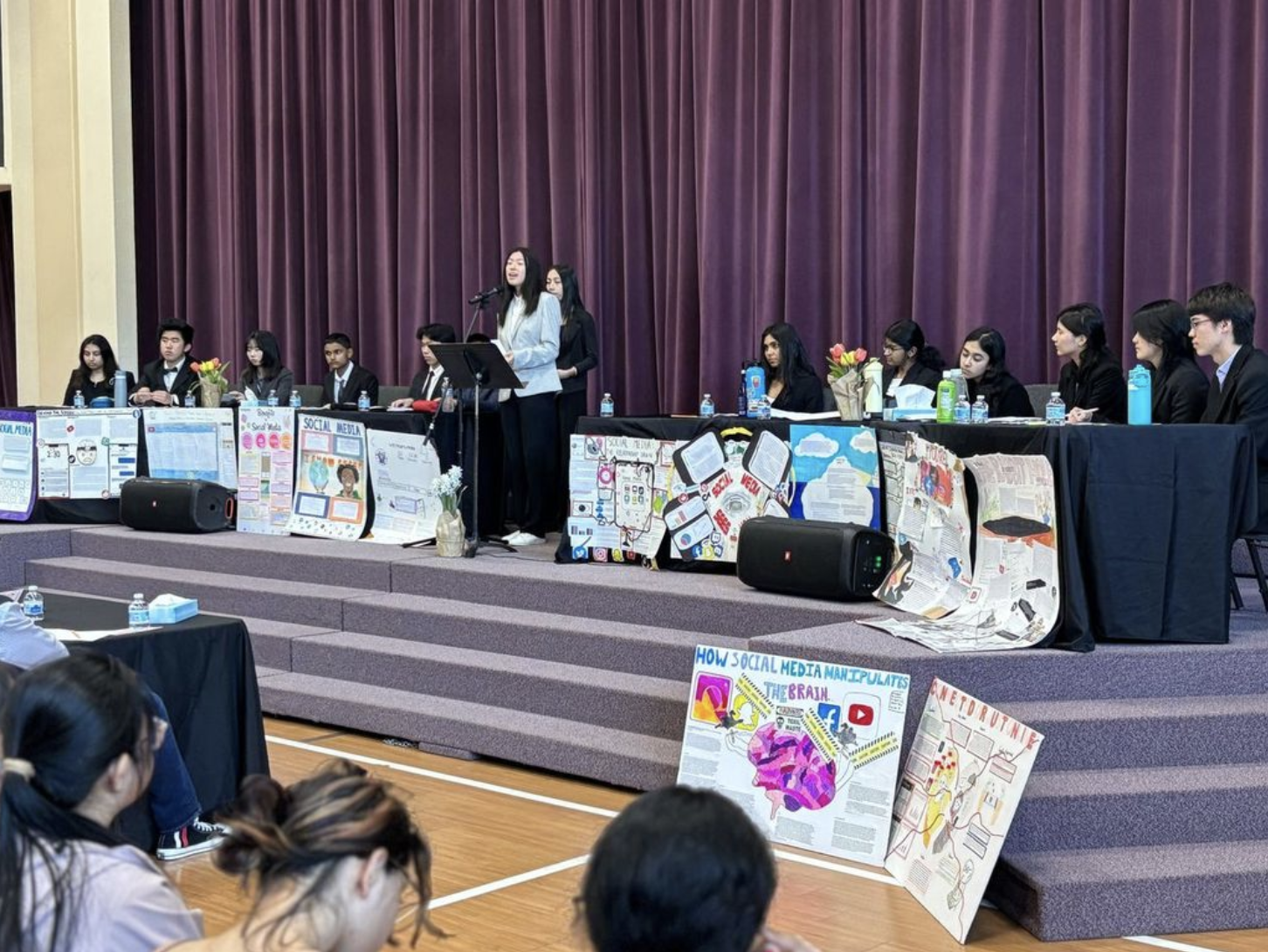
“And now, let’s introduce the teams for this year’s Honors Chemistry Valentine’s Day debate!”
Social media has become incredibly mainstream in our lives. We ask someone for their Instagram handle, not their phone number. Many of us have spent hours scrolling or liking posts. On February 12, the Honors Chemistry debate tackled a pertinent question — does social media have a positive or negative effect on human relationships and communication? Six sophomores from Period 3 and six juniors from Period 8 faced off in an intellectual showdown of immense research and elegant arguments to determine the impact of social media on our lives.
The day of the debate brought tension and excitement for both the sophomores and juniors. From the teams bickering with each other during lunch to the team members taking seventh period off to prepare, the Honors Chemistry students were ready to showcase their weeks of planning and coordination in front of high schoolers and staff members.
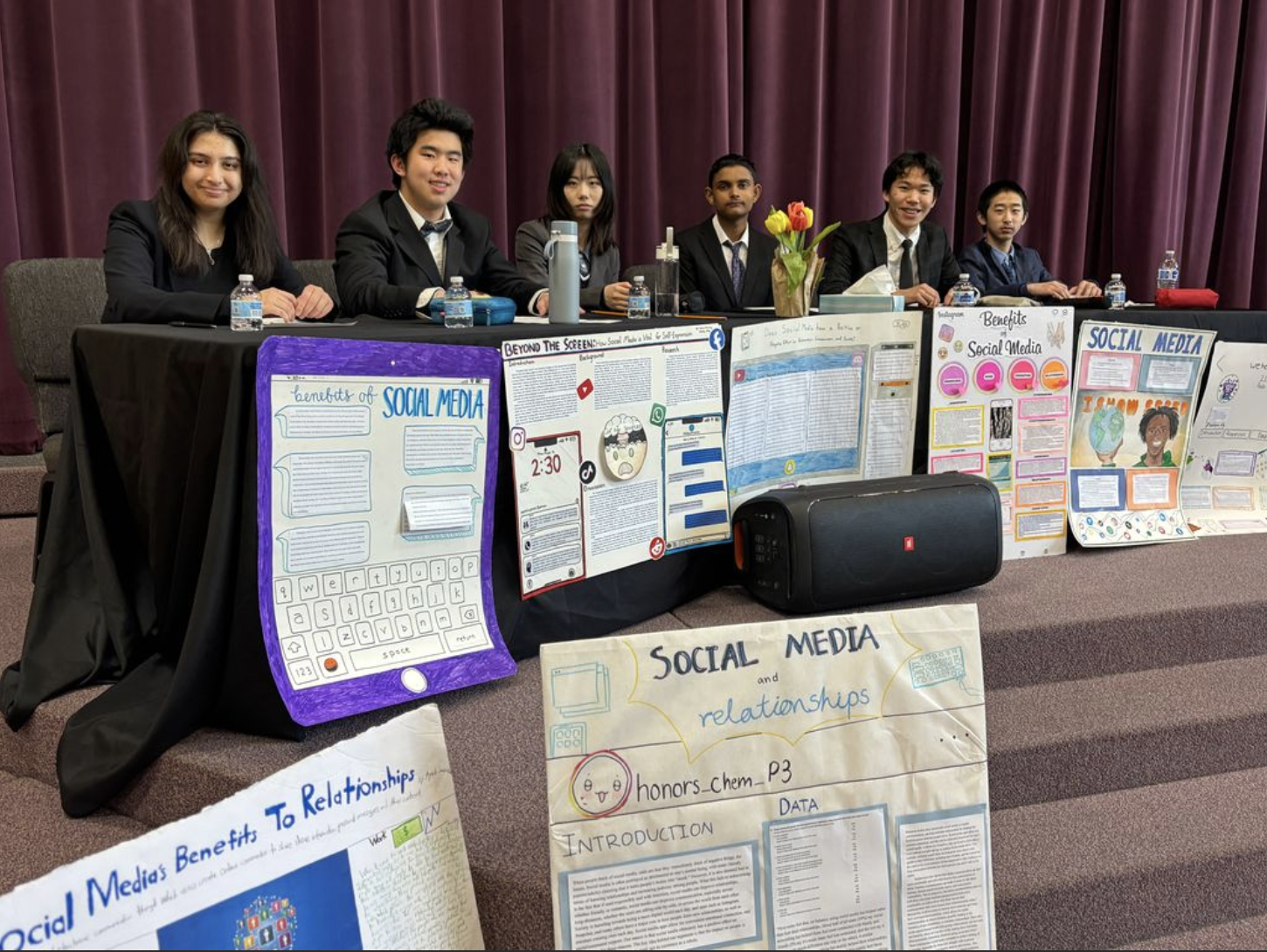
The debate commenced with a powerful opening statement by Hemangi Ghimire (10) from Period 3, the pro-social media team, who addressed the importance of social media for democracy and minority representation. Ghimire’s opening statement was successfully followed by one from Chen Ma (11) from the anti-social media team, who stated that social media operates akin to a casino by fueling addictions and promoting unrealistic expectations.
“[Social media] creates a uniquely harmful space for predators seeking to exploit lonely, vulnerable users,” said Ma. “And it divides us in a world that is already marked by significant conflict and opposing views.”
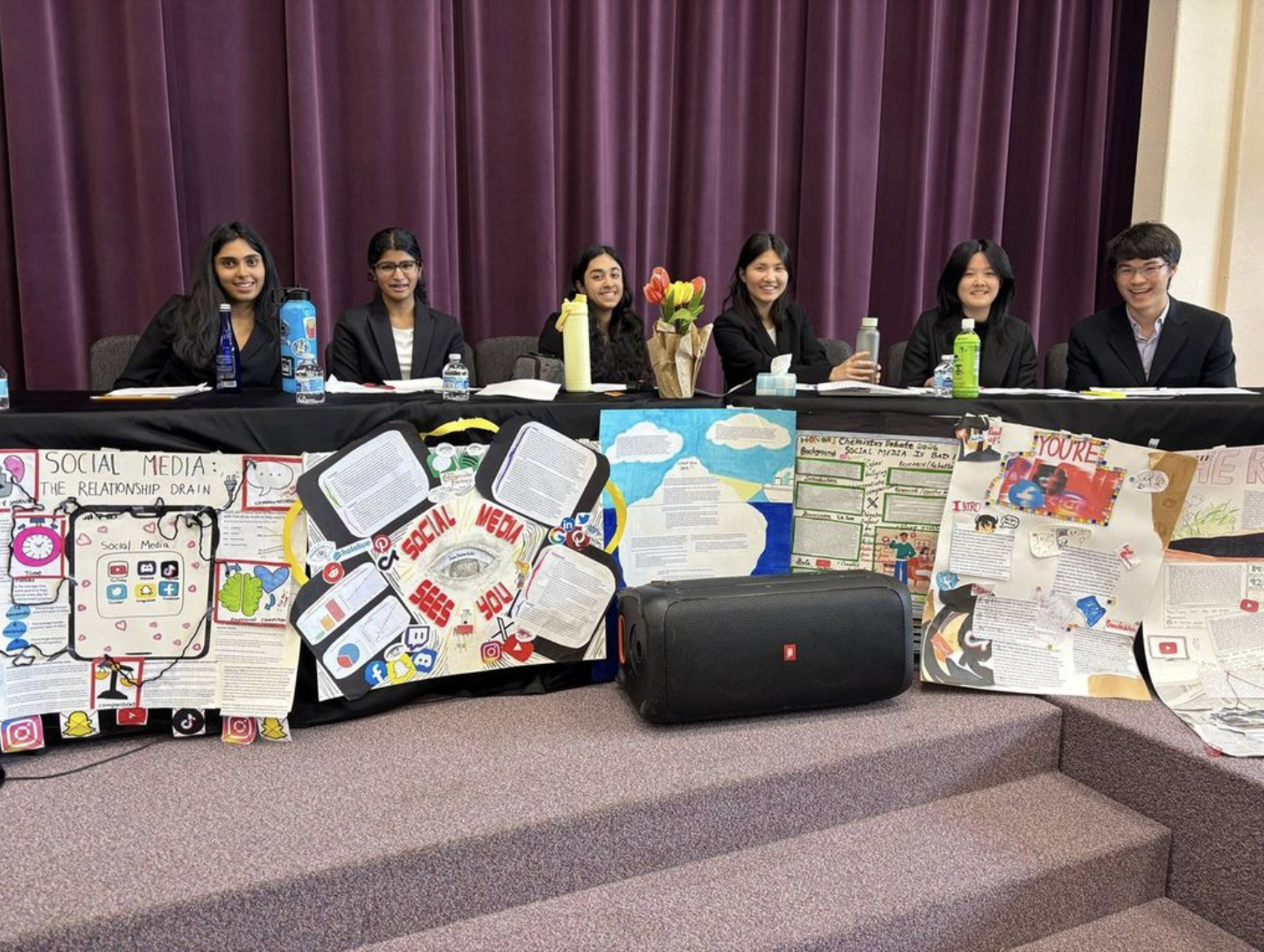
The opening statements were followed by two arguments from each team in an alternating fashion. Period 3’s arguments primarily focused on the importance of social media as a tool for connection and advancement of reform movements such as Black Lives Matter and #MeToo. On the contrary, Period 8 emphasized that excessive scrolling alters dopamine pathways, and excessive social media use increases political polarization and online sexual harassment. Interestingly, neither team could significantly modify their arguments because no computers were allowed during this year’s debate.
“I feel like Dr. Araci’s idea of not having computers really made it so that both teams had to do lots of research before,” said Nicole Lin (11), a member of last year’s Period 3 debate team.
A 1.5-minute break followed the constructive speeches, in which team members could strategize and prepare for their rebuttals. Similar to the arguments, each team presented two rebuttals in the same alternating fashion. This section of the debate clearly demonstrated the teams’ collaboration skills, as the rebuttals built off each other and the previous arguments. Gabriel Wang (10) presented the second rebuttal for the pro-social media team and shared his thoughts on working with the team while preparing for the debate.
“It’s been nice working with the team on this topic,” said Wang.
The rebuttals proved particularly strong, most notably with the pro-social media team citing that social media does not fit the scientific definition of an addiction and the anti-social media team claiming that social media operates as a biased tool that destroys human relationships. After the rebuttals, the crossfire began. Each team fired questions at the other, forcing debaters to draw from their current evidence or improvise sound arguments.
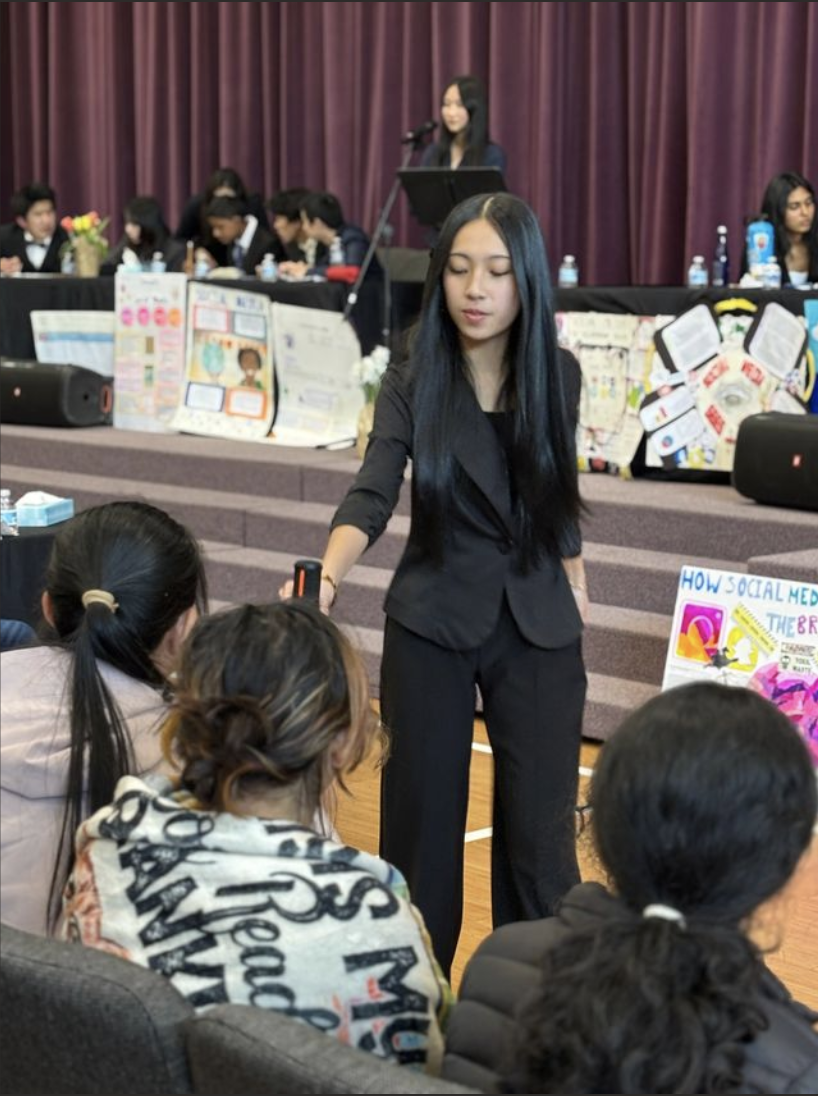
The debate concluded with judges questioning teams about their arguments or asking for specific sources, another opportunity for students to employ their quick-thinking skills. However, the debate was more than a chance to showcase research or argue with peers. According to Dr. Araci, the debate was designed as a fun, extra-credit experience for Honors Chemistry students by allowing them to shine outside the classroom and work with their classmates.
“High school is just one time in your lifetime,” said Dr. Araci. “…hopefully, when [students] think of Honors Chemistry, it will be those [exciting] moments, those extra credit assignments — cooking or music videos, right? Or this debate.”
Just a day after the debate, the results were announced: the anti-social media team emerged victorious. Reflecting on her debate experience, Hannah Zhao (11) from Period 8 shares that her strong rebuttal likely came from detailed planning, leaving little need for improvisation. She recommends that future debaters plan extensively to guarantee success, a sentiment echoed by the other team as well.
“I think the debate would have gone more smoothly on our side if we prepared more,” said Alyssa Liu (10), “but it was a busy week, so I think we tried our best.”
And despite the results declaring Period 8 as the winner, both teams demonstrated exceptional research and public speaking talent by presenting valid arguments to defend their respective sides of the social media debate. Ultimately, the tradition of the Honors Chemistry debates continues to foster healthy competition and a positive school environment, with this year’s debate reminding us to step away from our screens to strengthen our relationships.