Spotlight: Hour of AI by WiS/GWC
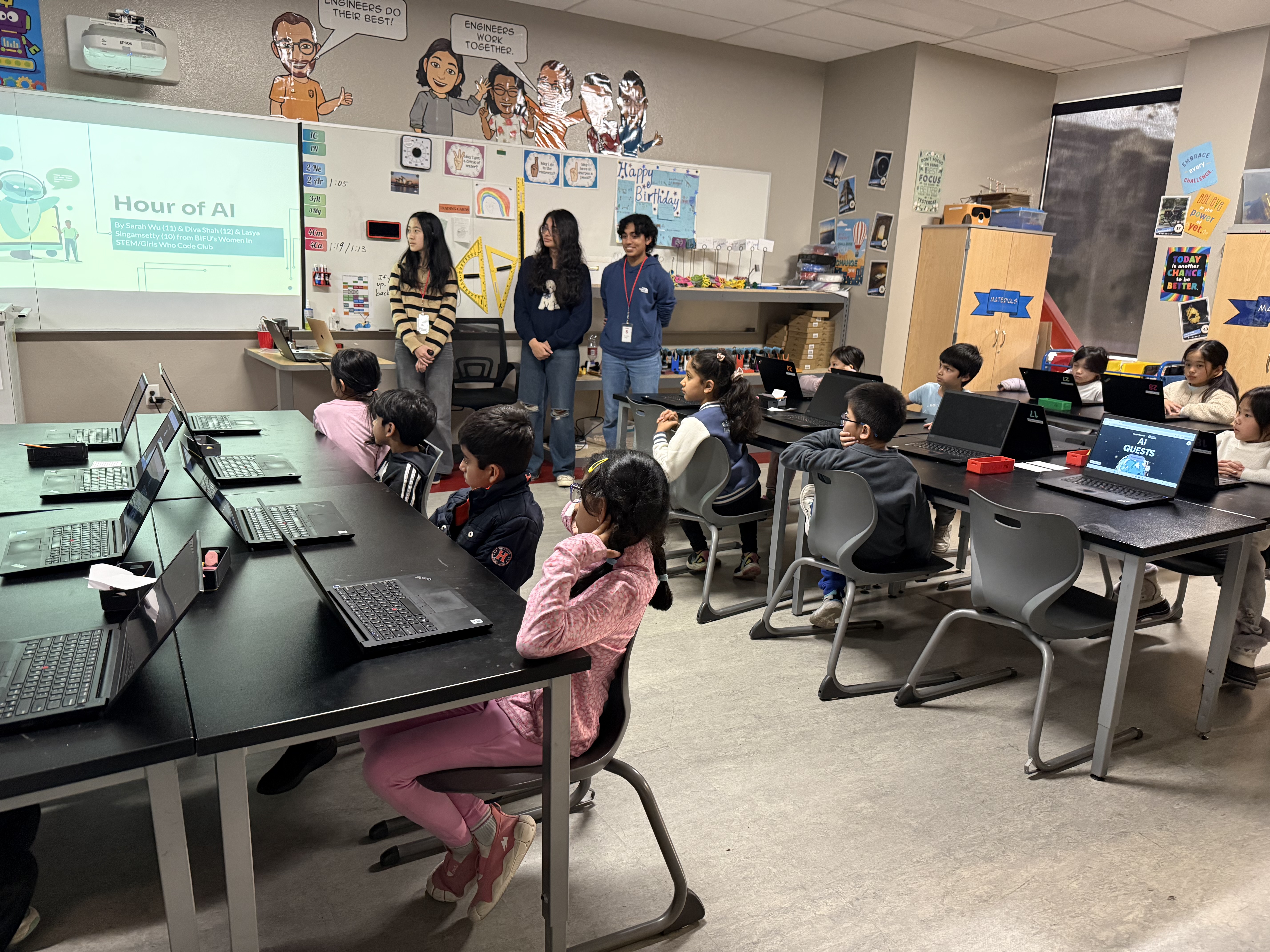
The age of artificial intelligence (AI) has come fast, and its growing role in our industries is hard to overlook. The necessity of introducing AI at a young age has become increasingly clear, as it may be hard to avoid AI in future careers. One organization that has sought to address this is BIFU’s WomenInStem/GirlsWhoCode (WiS/GWC) club. Beyond the regular club activities happening at the Upper School, including building machine learning models and studying programming languages, the club seeks to empower younger children in their journey by giving them an introduction to new technologies. With this in mind, three members (Lasya Singamsetty (10), Diva Shah (12), Sarah Wu (11)) of the club travelled to the BIF lower school on Jan. 23 to host BIF’s first Hour of AI.
As they arrived, a class of around 25 second graders filed quickly into the room, sitting apprehensively around large tables, ready to experience the process of making an AI model. But first, the students had to start off by learning about what AI really is. For many of them, this was not the first time they heard about the technology. AI such as ChatGPT, Claude, and other large language models were not entirely unfamiliar names. However, few had an idea of how AI worked, or what it really was.
The instructors introduced them to the definition of AI, along with its construction process and various applications, all while simultaneously working to break down words such as coding, programming, and recognition to facilitate understanding for the second graders. As they began to grasp the topics, the students found themselves imagining how they would use AI.
“I would use it for investigating things,” said one student. “For example, if I don't know which kind of fish it is, I can use AI to investigate.”
The current debate about AI is heated, with a wide spectrum of opinions. From techno-optimists to concerns about job-replacement and misinformation, public sentiment often creates a dichotomy between supporting and opposing AI. According to the Pew Research Center, 50% of Americans say they are more concerned than excited about the increased use of AI in daily life. Likewise, BIF second graders also had lots of opinions on the topic. When asked about how they felt about AI, over half the class eagerly raised their hands to share their perspective.
“[I think AI is] good because if you don't know something and AI knows it you can ask AI,” said Divit (2).
“It's good because it's entertainment,” said another student.
An overwhelmingly positive reception toward AI by the younger generations could be indicative of a larger trend of greater acceptance toward AI. It was here that the instructors felt it was important to emphasize the importance of approaching AI thoughtfully to make informed decisions about its use. Students were led to consider the potential risks and challenges which AI may pose as well.
“I heard that some people think that AI is bad because it makes people not talk to their friends,” said one student.
“Hackers might use AI to do something bad,” another added.
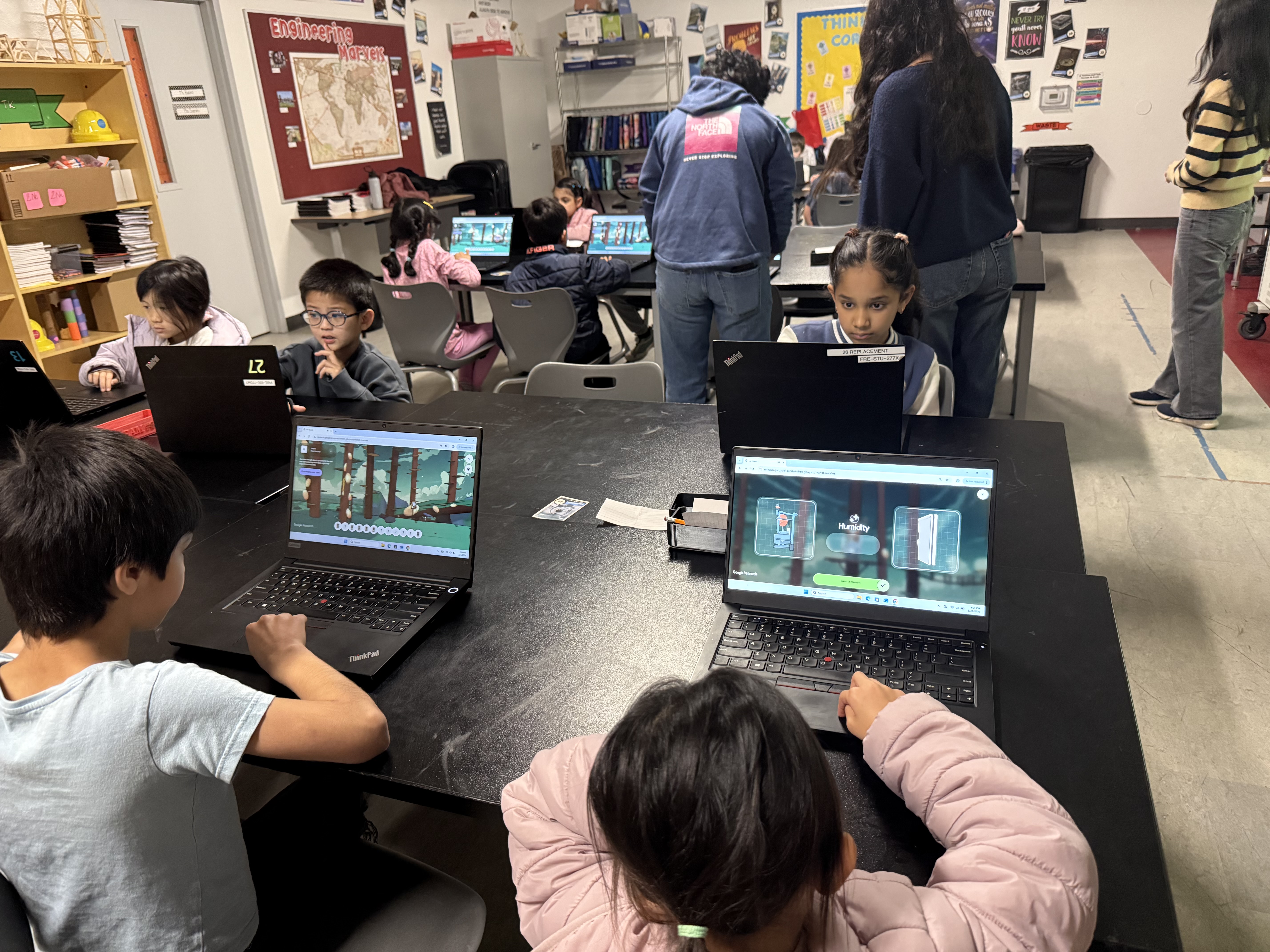
The discussion promoted critical thinking that helped students look beyond the surface, and set the stage for the hands-on activity which followed. The second half of the event involved the kids working through a simulated process of finding data in a digital forest, processing the data, making a model and testing its accuracy in order to build an AI model. The interactive activity and videos combined with the appealing characters made it easy to navigate the process. Meanwhile, instructors walked around to answer questions and resolve technical issues, as students gave each other hints to progress through the steps.
Through Hour of AI, WiS/GWC hopes that the opportunity to learn about the possibilities with AI inspires both curiosity and a life of learning. Ultimately, the goal is to strengthen the community while helping the next generation see new technology as something they too can shape.