Parents Should Respect Their Children’s Privacy

The idea that parents always have our best interests at heart has been drilled into kids’ heads for years. However, at some point, students should start having their own best interests at heart. When that happens, parents should trust their students to make decisions for themselves while still providing support for their children.
Looking through a student’s private space could break that trust, even if the student has nothing to hide. It shows that the parents don’t trust the students to make safe and responsible choices, which will inevitably create tension between them. If anything, looking through a student’s things will likely cause the student to feel less comfortable around their parents and may motivate them to try harder to hide things.
“I had to hide it,” said one anonymous student. “I didn’t want [my parents] to worry about what was going on because I thought I could handle it.”
If students can’t trust those at home, who can they trust? This could lead to trust issues in their life outside of home, making them solely reliant on themselves instead of friends.
Additionally, students are individuals who should make their own judgments. If they don’t feel the need to tell their parents something, then it probably isn’t necessary.
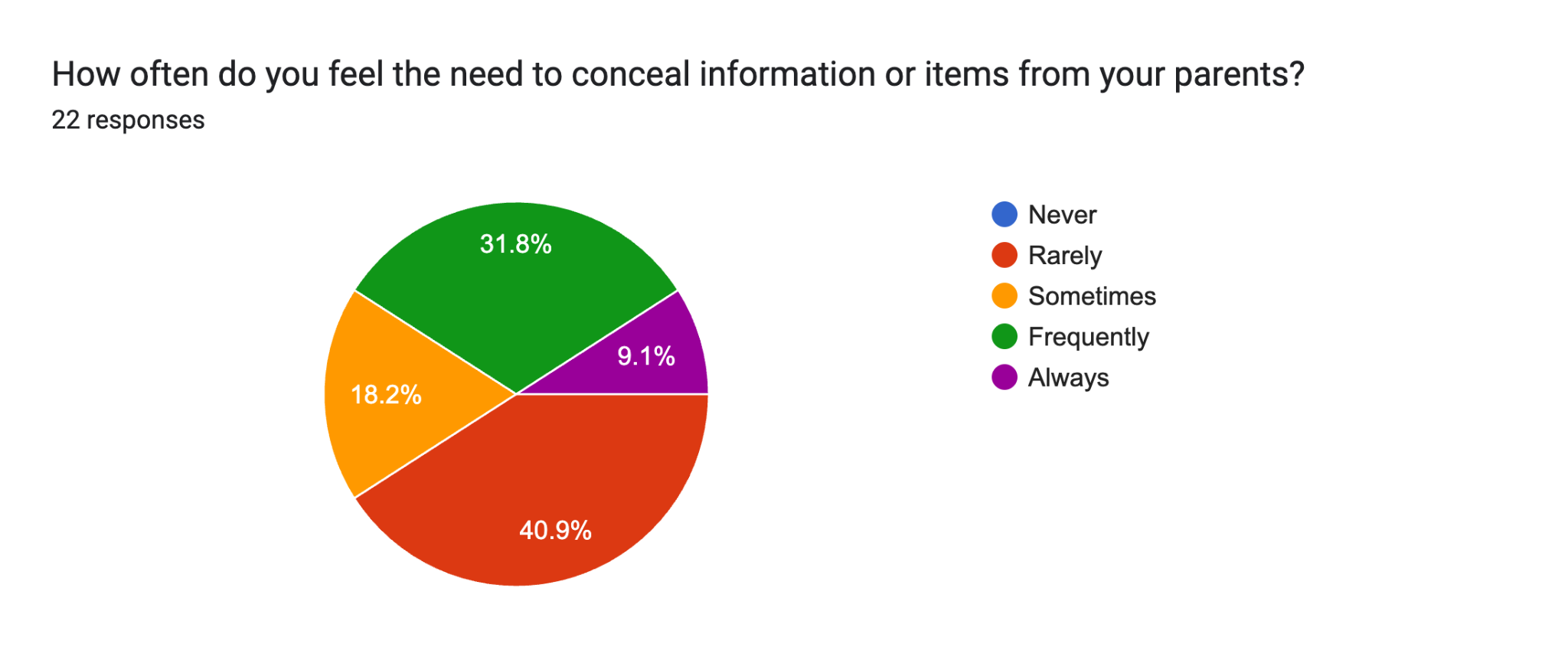
After asking some students, about 85% of them said that they had hidden something from their parents at one point. Some of the most popular methods include hiding objects in places where parents wouldn’t expect them or simply switching tabs to hide their current activity. The most common concern for students seems to be parents looking through their messages with other people and their device activity, although most say they aren’t hiding anything malicious.
Although students are their own person, parents play a big role in their lives. They help keep their children safe, and one of the best ways to do that is to monitor their activities. Due to the growing dangers of the internet, students may not be equipped or knowledgeable enough to distinguish between helpful and dangerous people online.
According to Childlight, “12.5% of children globally (300 million) are estimated to have been subject in the past year to online solicitation, such as unwanted sexual talk which can include non-consensual sexting, unwanted sexual questions and unwanted sexual act requests by adults or other youths.”
Many of these online cases could be eliminated early on if an adult went through their phones.
While safety is one concern that parents might have, another one is productivity. With releases of apps like TikTok, YouTube Shorts, and the already existing games on devices, it’s too easy to whip out a device and be trapped in an endless loop. However, the solution to this problem isn’t in snooping through their child’s phone, but rather setting boundaries mutually agreed upon by both parties.
While children do have to be kept in check from time to time, if they haven’t told their parents something, they probably don’t want to. If a parent wants to find something out, they should sit down and communicate with their child instead of looking through their belongings or devices without permission. Invading their privacy should only be used as a last resort when there is something to be worried about, such as mental health or personal safety.