Wicked: For Good Has Changed the Series for the Better
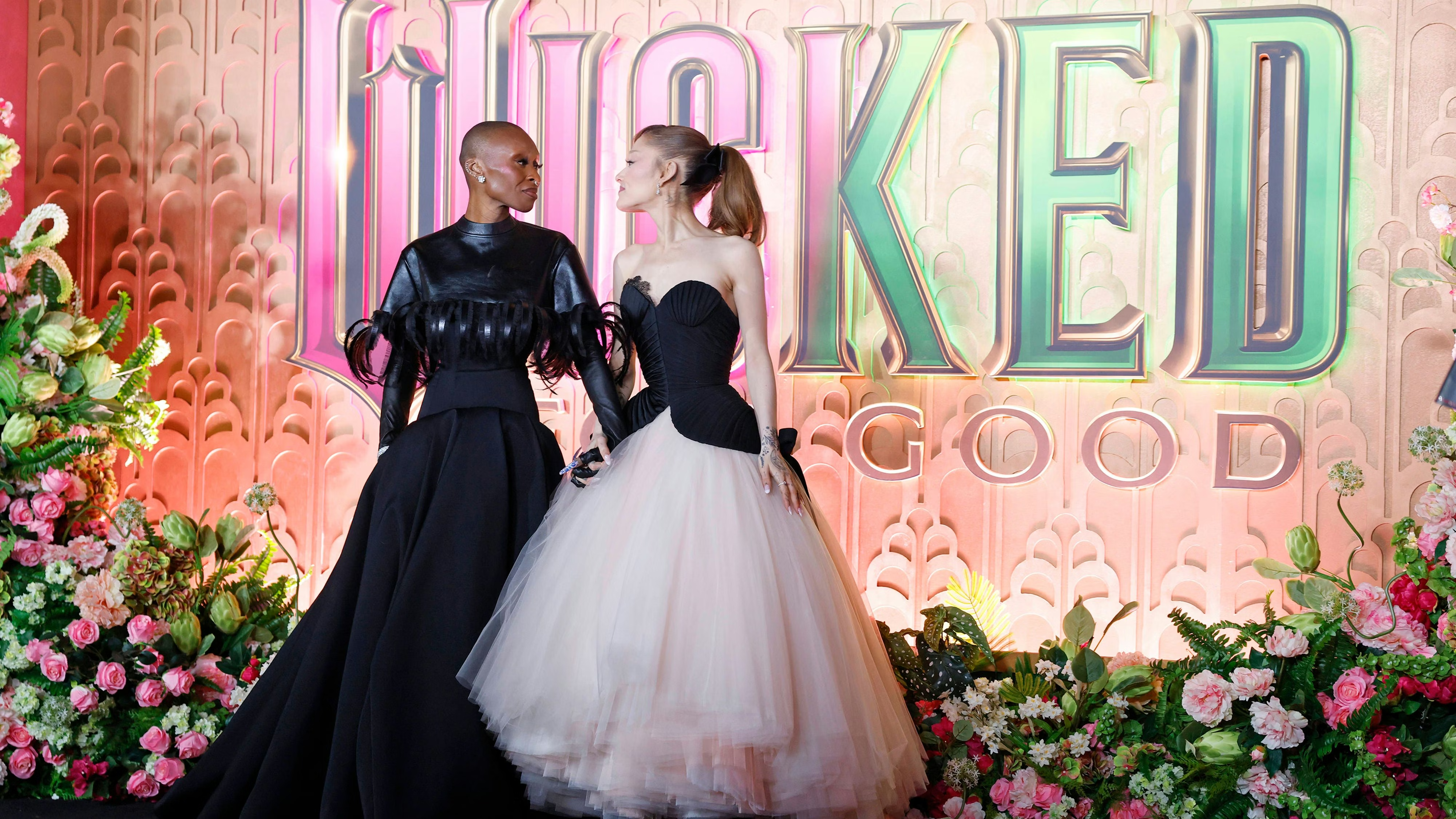
This article contains minor spoilers for Wicked: For Good.
“They need someone to be wicked, so you can be good.” — Elphaba to Glinda, Wicked: For Good
Continuing the passion of the first film, Wicked: For Good is a spectacular conclusion to the Wicked duology and Elphaba Thropp’s story due to its elegant incorporation of meaningful relationships and flawed characters. Presented by Universal Pictures and Jon M. Chu, Wicked: For Good stars Cynthia Erivo and Ariana Grande in the lead roles, supported by the talented cast of Jonathan Bailey, Jeff Goldblum, Michelle Yeoh, Ethan Slater, and Marissa Bode to create an outstanding musical.
Wicked: For Good opens with Glinda (Ariana Grande) serving as a figure of public morale and the puppet of Madame Morrible (Michelle Yeoh) and Oz (Jeff Goldblum) as people fear the return of Elphaba, the Wicked Witch of the West (Cynthia Erivo). After figuring out the wizard’s secret at the end of Wicked, Elphaba has been demeaned to Oz’s villain despite her valiant intentions of bringing justice to the discriminated animals and sharing the truth with the people. Conflict arises at her return to Oz’s palace, where she reunites with the wizard, Glinda, and Fiyero (Jonathan Bailey). Meanwhile, Dorothy’s untimely arrival in Oz forces Elphaba to decide what impact she wants to leave on the world of Oz and how she is remembered.
The sequel shines from its ability to open with the plot—the main characters and primary conflict were already explained in the first movie, allowing the filmmakers to skip the introductions to Oz this time. While this choice partially pushes the sequel to lose the heartfelt, innocent feel dominating the first movie, it leans into more mature themes of heartbreak, betrayal, and responsibility for one’s actions. Between its central love triangle and its raw depictions of grief and desperation, Wicked: For Good doesn’t hesitate to tug people’s heartstrings.
The movie incorporates seemingly simple but fundamental themes into its plotline, specifically friendship and the inadvertent consequences of even well-intentioned actions. Glinda and Elphaba’s friendship, complicated by their shared interest in Fiyero along with being pulled to opposing moral sides, prevails despite their unfortunate circumstances. This meaningful decision brings some hope back into the film and shifts it away from its previously gloomy tone.
Furthermore, Wicked: For Good shows that regardless of someone’s intentions, their actions can still cause more harm than good, a theme embodied in the famous track “No Good Deed Goes Unpunished.” Including this theme is important as it mirrors many real-life situations in which unfortunate consequences overshadow noble intentions, prompting audience reflection on their experiences with such circumstances.
Filled with The Wonderful Wizard of Oz references and emotionally heavy scenes, the sequel prompts a reflection of the importance of meaningful relationships in the face of hardship and the lengths one would go to bring perceived justice to the world. Overall, Wicked: For Good powerfully wraps up the Wicked series with a visually stunning film lauded for its musical prowess, star power, and emotional themes. Be sure to watch Wicked: For Good in theaters while it’s still running, or see the first film, Wicked, on Amazon Prime Video.