The U.S. Job Market Stall
As students of BASIS Independent Fremont Upper School sit inside classrooms every day to learn, they prepare themselves in hopes for a good future. For most, that future includes a stable income and job. However, recently, statistics show that the U.S. job growth is slowing down which has been having impacts on the nation-wide population.
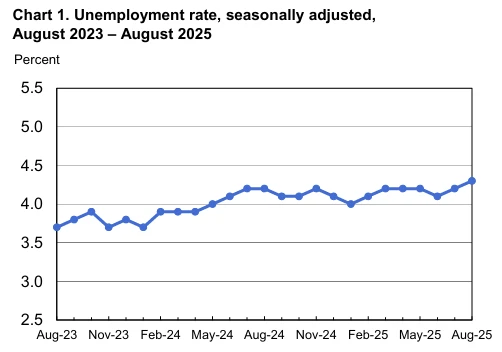
According to the U.S. Bureau of Labor Statistics, on Friday, September 5th, the unemployment rate was 4.3%, which is 0.1% higher than August’s. This is the highest unemployment rate since 2021. Additionally, the U.S. economy added only 22,000 jobs in August. In comparison, 73,000 jobs were added in July.
“...whether it’s through tariffs or other dynamics – interest rates still aren’t coming down – so I think a lot of companies are just saying, ‘not now,’” says Ron Hetrick, the senior labor economist at employment analytics company Lightcast, to CNN in an interview.
These statistics can be a result of numerous possibilities, but a rising questioned factor seems to be tariffs. These taxes for imports can lower income for companies which results in less hiring, due to the lack of money to pay employees.
“Also contributing to the job market’s doldrums are an aging population and the threat that artificial intelligence poses to young, entry-level workers,” states NBC Bay Area.
Current times have brought up the topic of artificial intelligence replacing humans in the work field. Some may argue that artificial intelligence will never fully replace humans while others support that it eventually will. But as of now, artificial intelligence has almost fully occupied some basic jobs, which can limit the number of jobs that are added to the U.S. economy and further contribute to the job market stall.
Specifically, the health care industry has been greatly contributing to the limited job growth as it added 46,800 jobs in August itself.
“That sector, however, accounts for just 15% of total employment, meaning many people are left on the sidelines. ‘For 85% of workers, they’re not seeing a lot of the jobs added,’ [tells] Kory Kantenga, LinkedIn’s head of economics Americas,” CNN shares.
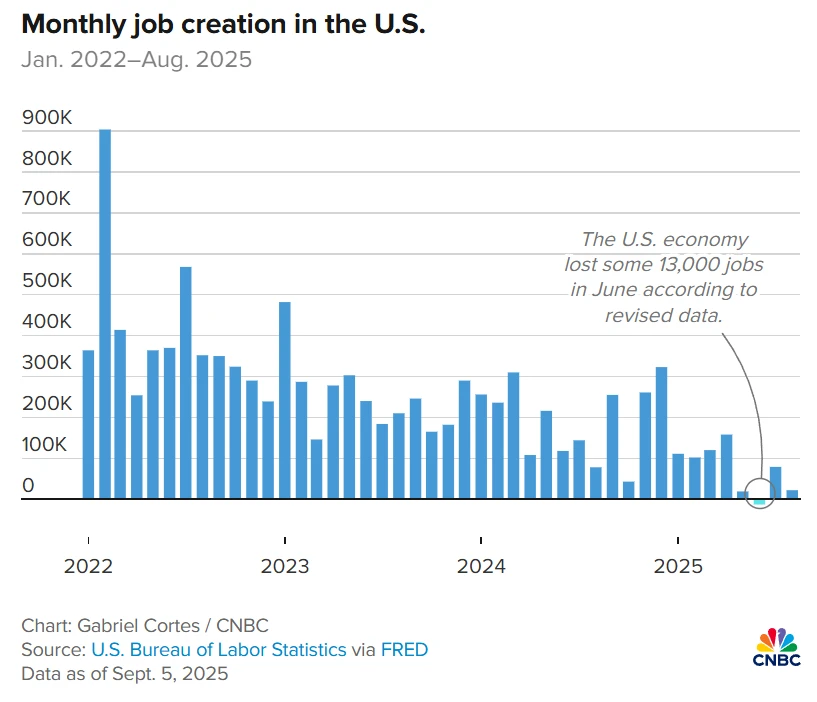
For others not in the health care industry, finding a job could be harder, especially for industries that are struggling to produce more jobs and have shown recent instability. This can lead to negative consequences such as unemployment, having a part-time job when in search of or have a need for a full-time job, or having to settle for a job with lower income than desired or needed.
However, it’s not all terrible news. The labor force and participation has increased compared to the previous months before August.
“The labor force, which shrank for three months in a row, increased by 436,000 people in August, according to BLS data,” CNN reports, “The labor force participation rate moved higher as well, ticking up to 62.3% from 62.